
Howard University School of Social Work Celebrates Homecoming 2026
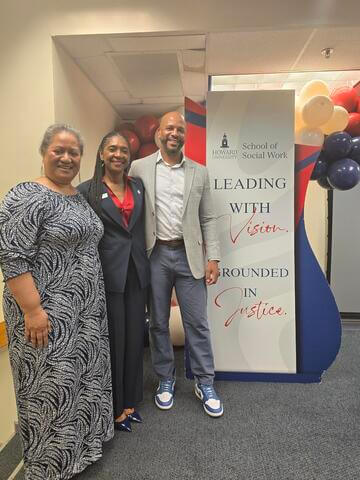
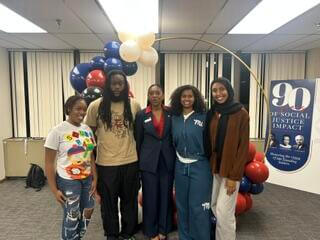
The Howard University School of Social Work (HUSSW) kicked off Homecoming Week 2026 with events that brought together national social work leaders, alumni, students, faculty, staff, and friends for professional dialogue, fellowship, and celebration. From a fireside chat examining the future of the social work profession to a spirited Saturday tailgate, the week's activities reflected HUSSW's commitment to professional leadership and the enduring connections that define the Howard experience.
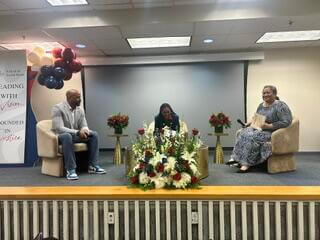
The celebration began on Tuesday, October 13, with a Homecoming Open House and Fireside Chat featuring two national leaders, Dr. Anthony Estreet, PhD, MBA, LCSW-C, Chief Executive Officer of the National Association of Social Workers (NASW), and Dr. Halaevalu F. Ofahengaue Vakalahi, PhD, MSW, President and CEO of the Council on Social Work Education (CSWE). Dr. Sheara Jennings, PhD, MSW, Dean of the Howard University School of Social Work, facilitated the discussion, which examined the challenges facing social work education and practice and the strategies needed to strengthen the profession.
The conversation addressed several pressing issues, including the affordability of graduate education, workforce compensation, professional licensure, and federal policy changes affecting access to advanced degrees. Of particular concern were changes to federal student loan programs under the U.S. Department of Education's
Reimagining and Improving Student Education (RISE) rule, implementing provisions of the One Big Beautiful Bill Act (Public Law 119-21). The new federal borrowing framework does not include social work among the professional-degree fields eligible for higher loan limits, leaving newly affected MSW students subject to an annual federal loan limit of $20,500 and an aggregate graduate borrowing limit of $100,000. The elimination of Graduate PLUS (Grad PLUS) loans for newly affected borrowers further complicates financing options, raising concerns about access to graduate education and the long-term implications for the social work workforce.
Drs. Estreet and Vakalahi discussed how NASW, CSWE, and other professional organizations are responding through legislative advocacy, regulatory engagement, and coordinated efforts to protect the profession's standing. They also examined the return on investment of social work education, the need for competitive wages, and the importance of workforce data to inform policy decisions and demonstrate the value of professional preparation. Affordability and access remained central to the discussion, with both leaders encouraging academic institutions to explore alternative approaches to financing graduate education. Strategies included expanding scholarships, increasing paid field placement opportunities, reviewing credit-hour requirements, and pursuing workforce development funding to reduce financial barriers while maintaining academic standards.
The discussion also addressed licensure reform and the need to consider alternative pathways for demonstrating professional competency without compromising accountability or standards of practice. As technology and artificial intelligence continue to influence education and service delivery, the speakers emphasized the importance of ensuring that social workers remain involved in shaping how these tools are developed and integrated into professional practice.
Throughout the conversation, the importance of collective advocacy emerged as a central message. As Dr. Vakalahi reminded attendees, "We are only as good as the whole of us." Her words reinforced the responsibility shared by professional organizations, academic institutions, practitioners, students, and alumni to remain engaged in the policies and decisions that will shape the future of social work.
View Recording
Watch the Homecoming Fireside Chat Recording
Homecoming festivities continued on Saturday, October 17, as the HUSSW Student Council Association (SCA) hosted a Homecoming Tailgate from 9:00 a.m. to noon.
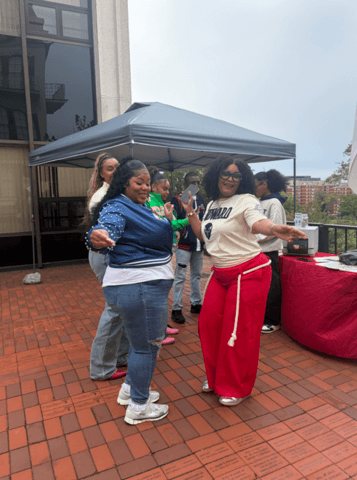
The event welcomed alumni returning from across the country, current students, faculty, staff, family, and friends to the multipurpose room (former library) and outdoor terrace for a morning filled with Bison pride, music, food, and fellowship.
The atmosphere was festive as guests enjoyed catered food, music from a DJ, a photo booth, and opportunities to reconnect with classmates, former professors, and longtime friends. For alumni, the gathering offered a chance to return to familiar spaces, reconnect with the School of Social Work, and meet the next generation of Howard-prepared social workers.
The tailgate also highlighted the energy and leadership of the Student Council Association, whose efforts created a welcoming space for the Howard community to come together during one of the University's most anticipated traditions. From shared memories and photographs to music and conversations across generations, the gathering captured the spirit of Homecoming and the pride that continues to connect our alumni, students, and friends.
We extend our sincere appreciation to Dr. Estreet and Dr. Vakalahi for sharing their expertise, to Dean Jennings for facilitating the Fireside Chat, and to the Student Council Association for organizing Saturday's Homecoming Tailgate. We also thank our faculty, staff, students, alumni, and friends who participated in the week's activities, along with everyone who contributed to their planning and success. Special thanks to Kornerstone Productions for their audiovisual production support and to Smyle Studios Event Experiences for providing the photo booth and DJ entertainment that added to Saturday's Homecoming festivity.